1873 to today
The history of the St. Eugene Mission
The building came first, and it was a school. Here is its history, from sources the community wrote and from the public record.
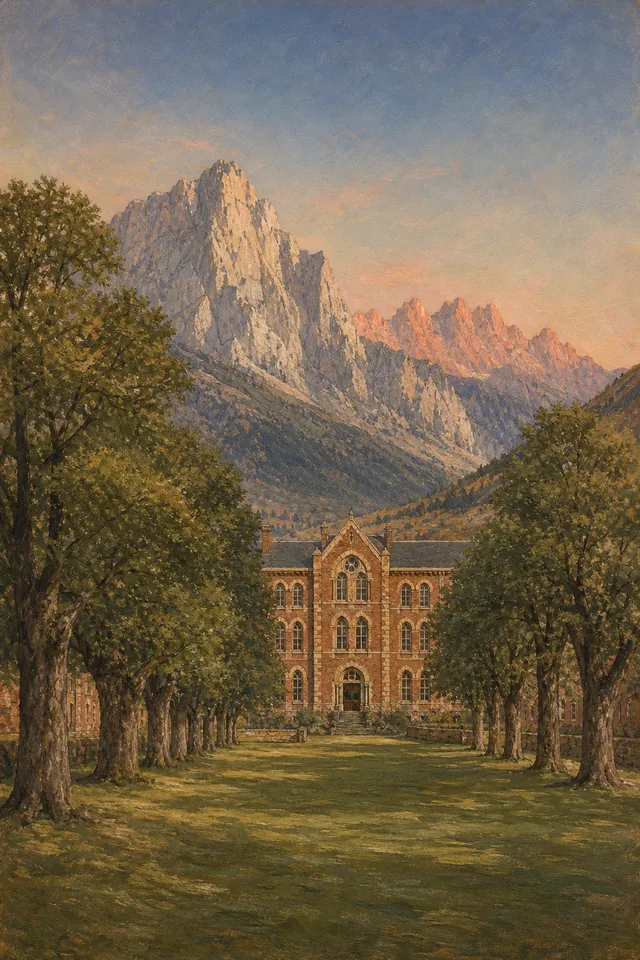
The building at the centre of St. Eugene Golf Resort & Casino is older than the resort by ninety years. It was built to remove Indigenous children from their families and their language. Its later life as a resort is a choice the Ktunaxa Nation made after long debate. This page sets out that history from the resort's own pages, which the community wrote, and from published records. Dates and quotations are given as the sources give them.
Ktunaxa land
The Ktunaxa (pronounced "k-too-nah-ha") have lived in this part of North America for more than 10,000 years, according to archaeological evidence cited by the resort. Their traditional territory covers about 70,000 square kilometres, mostly in what is now south-eastern British Columbia, and reaches into Alberta, Washington, Montana and Idaho. They were known for horsemanship and canoe-making, and travelled with the seasons across the Rockies and onto the Great Plains to follow elk, moose and deer. Their language is a cultural isolate: it is not related to any other language in the world.
The border between Canada and the United States split the Nation. Today there are four Ktunaxa bands in British Columbia: ʔaq̓am (St. Mary's) near Cranbrook, ʔakisq̓nuk (Columbia Lake) south of Windermere, Yaqan Nuʔkiy (Lower Kootenay) near Creston, and Tobacco Plains near Grasmere. Two more are in the United States, in Bonners Ferry, Idaho, and Elmo, Montana. The Shuswap Indian Band settled in Kootenay territory in the mid-19th century and later became part of the Ktunaxa Nation; the resort's history says the band separated from the Nation in 2004. It remains one of the resort's owners.
The mission and the first schools
- 1873The Oblate Order founds the first mission in the region at St. Mary's Band, north of Cranbrook. A school is built but never used, because no principal can be found.
- August 1890A second residential school opens near St. Eugene Church. Father Nicolas Coccola is principal; the Sisters of Providence staff it for 12 boys and 15 girls.
- 1893Pierre, a Ktunaxa man, brings a galena sample to Father Coccola. They stake claims above Moyie; the claim is sold for $12,000.
- 1897St. Eugene Church, prefabricated in Italy, is built. Within ten years the St. Eugene Mine has produced more than $10 million and launched the company later known as Cominco, today Teck Resources.
- Late 1890s–1901At the Canadian Pacific Railway's request a hospital is developed at the Mission; it moves to Cranbrook in 1901. The Mission mills its own grain in the region's first flour mill.
The red-brick school, 1912 to 1970
In 1910 the Canadian government paid for a new red-brick building, the Kootenay Indian Residential School. It opened in 1912 and is the core of the resort today. It ran as a farm school. The Sisters of Providence served until 1929, the Sisters of Charity of Halifax arrived in 1936, and the school closed in 1970. Wikipedia, citing the National Centre for Truth and Reconciliation, adds that the federal government took over its operation in 1969. The resort's question-and-answer page says that between 1912 and 1970 more than 5,000 children from the Okanagan, Shuswap, Blackfoot and Ktunaxa Nations were taught there.
The resort does not soften what the school was for. Its history page describes residential schools as part of a policy to assimilate Indigenous people, including attempts to extinguish their languages, spirituality and culture. It notes that the Truth and Reconciliation Commission has called that policy "cultural genocide". More than 130 such schools operated across Canada.
On 30 June 2021, the ʔaq̓am community announced that ground-penetrating radar had found 182 unmarked graves near the former school. As reported, its leadership said the site was a cemetery where wooden crosses had decayed over time. It also said these factors make it extremely difficult to establish whether the graves hold children who attended the St. Eugene school. We repeat that statement as the community gave it, without adding to it.
The empty years
In 1973 the British Columbia government leased the building, intending to turn it into a psychiatric care facility. The historic fixtures and artifacts were stripped out. After $750,000 had been spent on renovations, the project was abandoned. The next winter the pipes burst and flooded the building, causing severe damage. For about twenty years it stood empty, which the resort's history calls "a constant reminder to the Ktunaxa people of a dark period in our history".
Taking it back
The turn came through words, and they are quoted throughout the resort's pages. Elder Mary Paul said that since the culture of the Kootenay people had been taken away within the St. Eugene Mission School, it was within that building that it should be returned. A 2025 article on the resort's site dates the words to 1984. The resort also quotes a shorter saying of hers: "You lose something only if you refuse to pick it up again."
In 1992, the resort writes, former Chief Sophie Pierre began the work of reclaiming the building. She had attended the Mission school herself, and she later received the Order of Canada. The process started with family visits to the school and "kitchen table" talks. Then came two years of discussion with more than 1,500 members of the five bands who share the 130 hectares of reserve land. Some wanted the building torn down. In the end a referendum was held, and every band voted strongly for restoration.
The rest took a decade. Federal job-development money let band members learn trades while they gutted the interior back to its red brick walls. The project needed $40 million. A 2022 article on the resort's site says the Columbia Basin Trust agreed to build the golf course ahead of the hotel and casino, and that the finished course then helped win the money for the rest. A 2025 article adds a problem specific to reserve land: because First Nations do not hold title to it, the land cannot secure a loan, which made financing slower and more expensive.
- May 2000The 18-hole course by Les Furber opens. The resort's 2022 article gives the date as May 20, 2000; 80 per cent of the original construction crew were First Nations.
- 2001The course finishes third in Golf Digest's Best New Canadian Golf Course.
- September 2002Casino of the Rockies opens.
- January 2003The resort fully opens.
- Fifth anniversarySophie Pierre later recalled that she did not relax until the resort's fifth anniversary, when a partnership of the Ktunaxa Nation, Samson Cree Nation and Chippewas of Rama First Nation took over management.
- June 2017St. Eugene becomes solely owned by the four Canadian Ktunaxa bands and the Shuswap Indian Band.
- 2017 or 2018The KOA RV Park opens. The resort's pages give both years.
- Spring 2025Deluxe Lodge rooms are renovated.
The building today
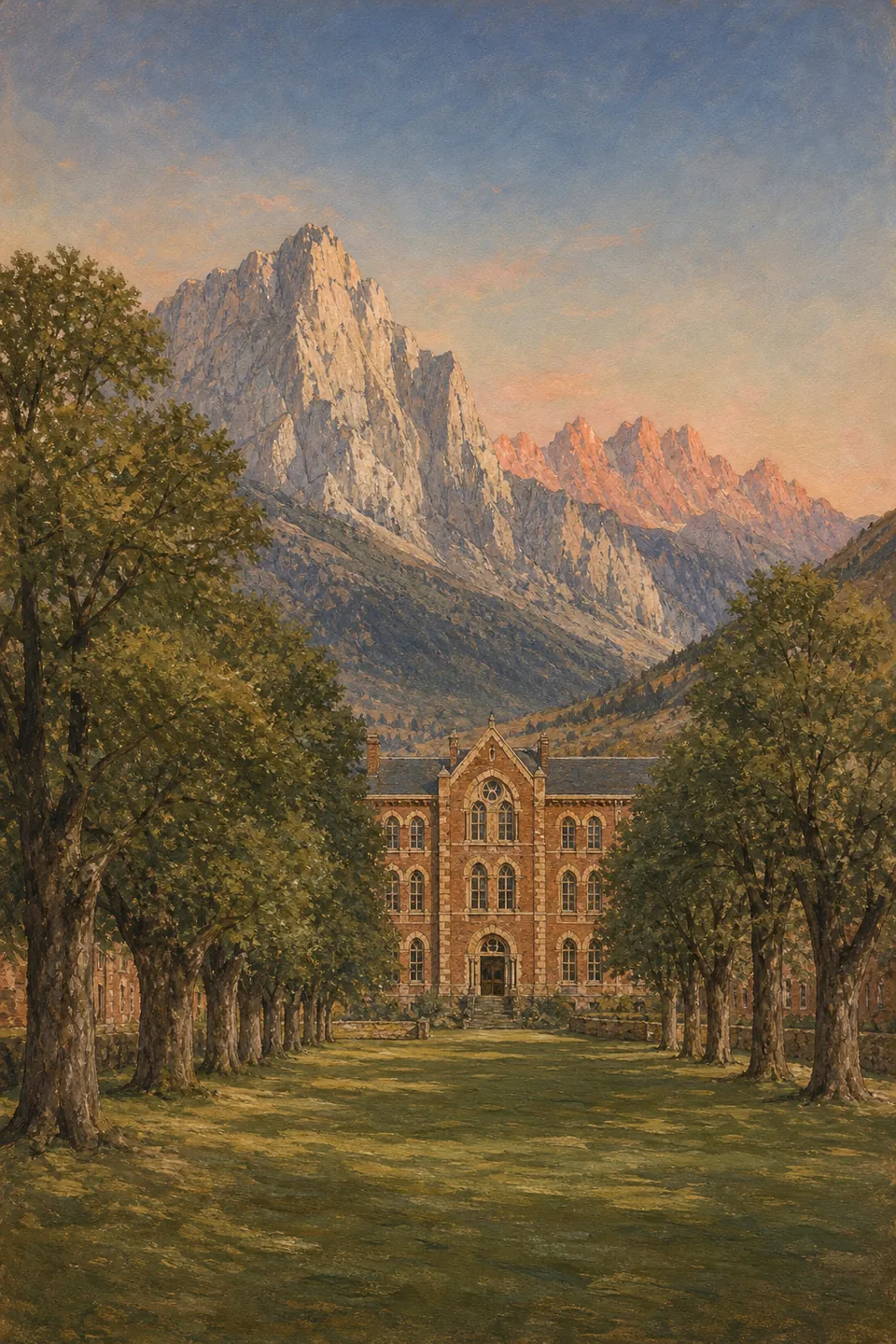
We could not find the name of the architect of the 1910 to 1912 building in any source we read, and we have not guessed. The resort's own 2025 article calls it a "red roofed ivy-covered Spanish-colonial-style hotel". Its room pages describe the 25 Mission rooms as each unique, keeping "original brickwork, vaulted ceilings and hand-hewn timbers". Historic photographs line the red brick walls. The Chief David Room, one of the event spaces, was the school's chapel. The Ktunaxa Interpretive Centre occupies the ground floor, where a documentary, Red Brick School, tells former students' stories in their own words.
Names on the land
The resort keeps the history close in small ways. The signature suite is named after Chief Isadore, whom the resort describes as a well-respected Kutenai chief of the 1800s. The restaurant in the Mission Building is Numa, the Ktunaxa word for thunder; the one in the casino is Kiʔsuʔk k̓ikiⱡ, "good food". Each of the 18 holes has a Ktunaxa name, chosen with a committee of Elders, and Dorothy Alpine, whom the resort calls one of the last fluent speakers, helped. The signs are cut from pine beetle-damaged wood. One hole is called Fire Wagon, the Ktunaxa name for trains when they first saw them. Its sign notes that the Ktunaxa once held free travel passes on the railway as part of their compensation.
Where this comes from
Main sources: steugene.ca history, residential school history, Ktunaxa culture, Creation Story, welcome, FAQ, and the news articles Through the Years (2022) and Celebrating 25 Years of Golf (2025), read on 15 November 2026. Secondary: Wikipedia, Kootenay Indian Residential School. For the Nation itself: ktunaxa.org.